- 21 Jul 2026
- 2759 Views
- 4 minutes read
What Are Smart Contracts? A Beginner's Guide to Understanding Blockchain Automation
Blockchain technology has introduced many new concepts, and one of the most important is the smart contract. Although the name sounds complicated, the idea behind it is surprisingly simple.
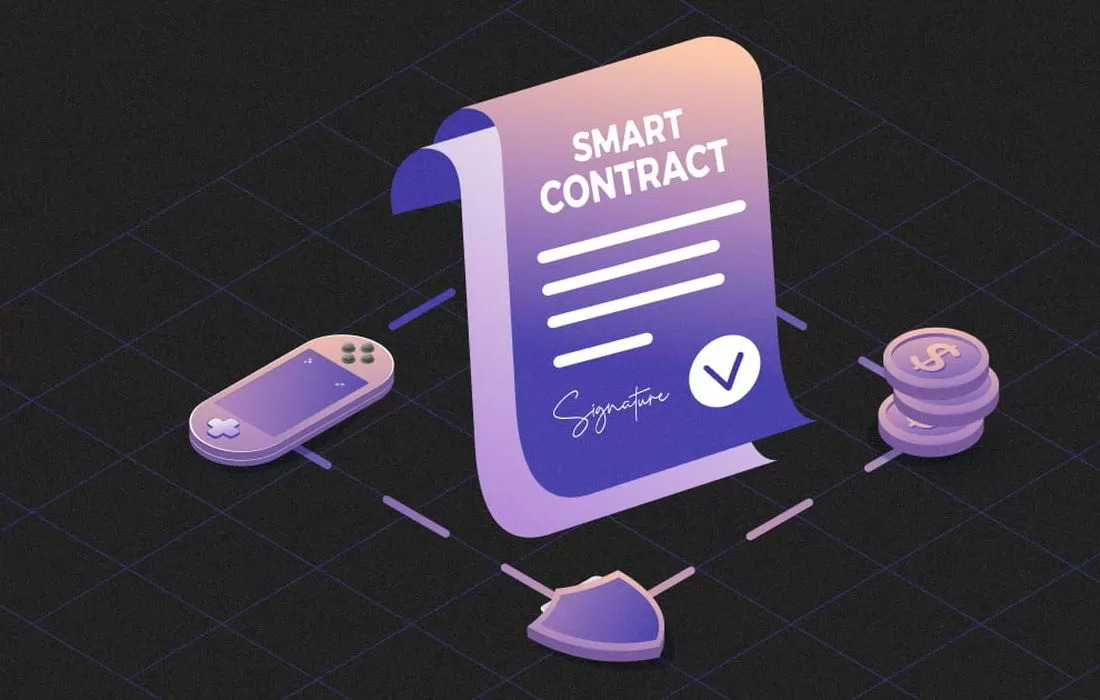
A smart contract is a digital agreement that automatically carries out predefined actions when specific conditions are met. Instead of relying on paperwork or third parties, smart contracts use blockchain technology to execute transactions securely and transparently.
Today, smart contracts are used in finance, gaming, insurance, logistics, healthcare, and many other industries. Understanding how they work can help you better understand the future of digital technology.
What Is a Smart Contract?
A smart contract is a computer program stored on a blockchain.
It automatically performs an action when certain rules are fulfilled.
Think of it like a vending machine.
You insert money, choose a product, and the machine automatically delivers your purchase. There's no cashier involved because the rules are already programmed.
Smart contracts work in a similar way. Once the required conditions are met, the contract executes automatically.
How Do Smart Contracts Work?
The process usually follows four simple steps.
Step 1: Conditions Are Written
Developers create the rules that determine when the contract should execute.
For example:
- Payment received
- Product delivered
- Deadline reached
- Approval completed
Step 2: The Contract Is Published
After development, the smart contract is deployed to a blockchain network.
Once published, it becomes available for users according to its programmed rules.
Step 3: Conditions Are Verified
The blockchain continuously checks whether the required conditions have been satisfied.
Because verification happens across a decentralized network, no single organization controls the process.
Step 4: The Contract Executes Automatically
When every condition is met, the programmed action happens automatically.
No manual approval is required.
Why Are Smart Contracts Important?
Smart contracts reduce the need for intermediaries.
Instead of relying on multiple organizations to verify agreements, blockchain technology automates much of the process.
Potential benefits include:
- Faster execution
- Greater transparency
- Improved efficiency
- Reduced paperwork
- Lower administrative costs
- Increased accuracy
For many industries, this can simplify complex processes.
Real-World Examples of Smart Contracts
Smart contracts are used far beyond cryptocurrency.
Financial Services
Banks and financial technology companies are exploring smart contracts to automate lending, payments, and settlements.
Supply Chains
Businesses use blockchain to track products throughout manufacturing and shipping.
Smart contracts can automatically update records as goods move through the supply chain.
Insurance
Insurance companies can automate certain claims when predefined conditions are verified.
This may reduce processing time while improving transparency.
Real Estate
Property transactions often involve paperwork and multiple intermediaries.
Smart contracts may help simplify parts of the buying and selling process.
Digital Content
Artists, musicians, and creators can use blockchain technologies to manage digital ownership and automate royalty payments.
Advantages of Smart Contracts
Many organizations are exploring smart contracts because they offer several potential advantages.
Automation
Tasks happen automatically once conditions are satisfied.
Transparency
Transactions recorded on public blockchains can often be independently verified.
Security
Blockchain technology helps protect contract data from unauthorized modification.
Accuracy
Automation reduces the possibility of certain manual processing errors.
Global Accessibility
Blockchain networks operate internationally, allowing users from different countries to interact more easily.
Are There Any Limitations?
Like every technology, smart contracts also have limitations.
These include:
- Programming mistakes
- Regulatory uncertainty
- Dependence on accurate external data
- Technical complexity
- Scalability challenges
Understanding both strengths and limitations helps create realistic expectations.

Smart Contracts and Ethereum
Although several blockchain networks support smart contracts, Ethereum is one of the most well-known.
Ethereum introduced programmable blockchain applications that allow developers to build:
- Decentralized applications (dApps)
- Digital marketplaces
- Blockchain games
- Financial platforms
- Token ecosystems
Many modern Web3 projects are built using smart contract technology.
Why Learning About Smart Contracts Matters
Smart contracts are becoming increasingly relevant as blockchain adoption grows.
Understanding their basic principles can help you:
- Understand Web3 applications
- Explore blockchain innovation
- Improve digital literacy
- Follow technological developments
- Recognize practical business applications
You don't need to become a programmer to understand how this technology works.
Learning the fundamentals is enough to build confidence when reading about blockchain innovations.
Final Thoughts
Smart contracts represent one of the most exciting innovations made possible by blockchain technology.
By automating agreements, improving transparency, and reducing reliance on intermediaries, they have the potential to improve efficiency across many industries.
Although the technology is still evolving, understanding smart contracts today provides valuable insight into the future of digital innovation.
As always, education is the best place to start.
Learn More with OurTeamClub
At OurTeamClub, we believe that understanding technology is the first step toward making informed decisions.
Our educational community explores blockchain, Web3, financial literacy, digital innovation, and emerging technologies through beginner-friendly resources and ongoing learning opportunities.
Whether you're curious about blockchain or expanding your knowledge of Web3, we're here to help you continue your journey.
👉 Explore our educational resources and discover how blockchain technologies are shaping the future.
Written by
Skye Jensen
Recent posts
- What Is a Crypto Bridge? A Beginner’s Guide to Cross-Chain Transfers
- What Are Layer 1 and Layer 2 Blockchains? A Beginner’s Guide
- What Is a Blockchain Explorer? A Beginner’s Guide to Tracking Crypto Transactions
- Crypto Coins vs. Tokens: What Is the Difference?
- What Is a Blockchain Node? A Beginner’s Guide to Nodes and Network Validation