
- 05 Oct 2026
- 381 Views
- 9 minutes read
What Is a Blockchain Node? A Beginner’s Guide to Nodes and Network Validation
When people hear the word blockchain, they often think about Bitcoin, Ethereum, cryptocurrency wallets, or digital transactions.
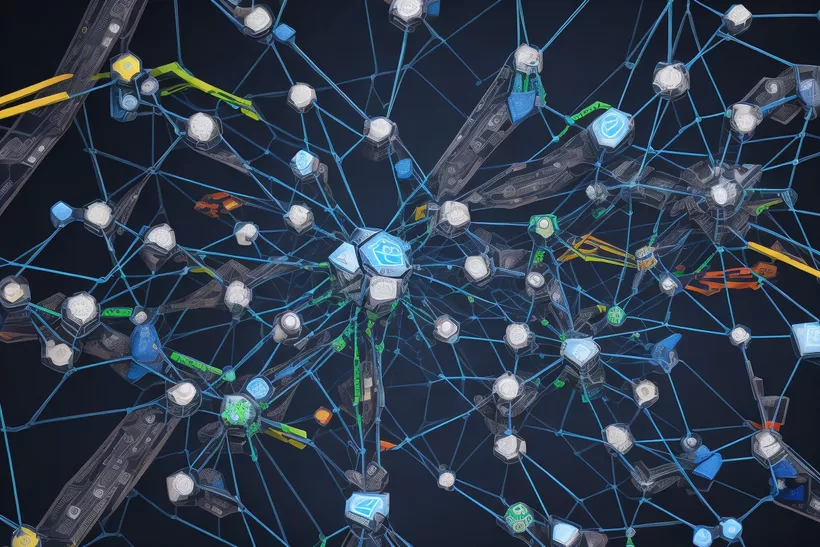
But behind every blockchain network is a distributed system of computers that communicate with each other and help maintain the network.
These computers are commonly called blockchain nodes.
Nodes are an essential part of decentralized networks because they help store, verify, and distribute blockchain information. Without a functioning network of participants, a blockchain could not operate in the same decentralized way.
So, what exactly is a blockchain node? How does it work? What is the difference between a full node and a validator? And why are nodes important for cryptocurrency?
This guide explains the concept in simple terms.
What Is a Blockchain Node?
A blockchain node is a computer or other device that connects to a blockchain network and participates in maintaining or communicating blockchain data.
Depending on the type of node and the blockchain protocol, a node may:
- Store blockchain data
- Verify transactions
- Verify blocks
- Communicate with other nodes
- Maintain a copy of blockchain information
- Participate in consensus
- Help distribute transactions and blocks across the network
The exact role of a node depends on the blockchain.
For example, nodes on a Proof of Work network may participate in transaction and block verification without necessarily being miners, while validators on a Proof of Stake network have a specific role in proposing and confirming blocks.
Why Do Blockchain Networks Need Nodes?
A blockchain is designed to operate without relying on a single central computer.
Instead, information is distributed across many participants.
Imagine a traditional database where one company controls the only official copy.
If that central database becomes unavailable or is manipulated, the system can be seriously affected.
A decentralized blockchain works differently.
Multiple independent computers maintain and communicate information about the network.
This distributed structure can make the system more resilient and allows participants to independently verify blockchain activity.
Nodes are therefore one of the foundations of blockchain decentralization.
How Do Blockchain Nodes Communicate?
Blockchain nodes communicate with each other through a peer-to-peer network.
Instead of every participant connecting to one central server, nodes can communicate directly with other nodes.
A simplified process looks like this:
- A user creates a blockchain transaction.
- The transaction is broadcast to the network.
- Nodes receive the transaction.
- Nodes check whether it follows the network's rules.
- Valid transactions can be propagated to other nodes.
- A block producer or validator includes transactions in a block.
- Nodes receive and verify the new block.
- The blockchain state is updated.
This process allows information to move through a distributed network rather than depending on one central authority.
What Does a Blockchain Node Verify?
One of the most important functions of many nodes is verification.
A node can check whether transactions follow the rules defined by the blockchain protocol.
Depending on the network, this may include checking:
- Whether a transaction has a valid digital signature
- Whether the sender has sufficient funds
- Whether the transaction follows protocol rules
- Whether a transaction attempts to spend the same funds twice
- Whether a block follows the network's consensus rules
- Whether transactions inside a block are valid
This independent verification is important because participants do not have to simply trust another participant's claims about the state of the blockchain.
What Is a Full Node?
A full node is a node that independently verifies blockchain data according to the rules of the network.
Full nodes typically maintain significant amounts of blockchain data and validate blocks and transactions.
One of their major advantages is independence.
Instead of asking another service whether a transaction or block is valid, a full node can verify the information itself.
This makes full nodes important for decentralization and network integrity.
What Is a Light Node?
A light node, sometimes called a lightweight node, does not necessarily store the complete blockchain history.
Instead, it can use a smaller amount of data and rely on other network participants for certain information.
Light clients can be useful when running a complete node is impractical because of:
- Limited storage
- Limited bandwidth
- Limited computing resources
- Mobile-device constraints
The exact implementation depends on the blockchain protocol.
The trade-off is that lightweight systems generally provide less independent verification than a fully validating node.
What Is a Mining Node?
On Proof of Work networks, mining involves using computational resources to participate in block production.
A mining setup can include software and hardware that work together to perform the computational process required by the network.
However, it is important to distinguish running a node from mining.
A person can operate a blockchain node without mining.
Similarly, mining infrastructure may rely on a node to obtain transactions and blockchain information, but mining and node operation are different functions.
What Is a Validator Node?
Proof of Stake networks use validators rather than Proof of Work mining as their primary block-production mechanism.
A validator participates in the network's consensus process.
Depending on the blockchain, validators may:
- Propose blocks
- Attest to blocks
- Verify transactions
- Participate in consensus
- Help secure the network
Ethereum is one well-known example of a blockchain that uses Proof of Stake.
Validators on Ethereum participate in the network according to Ethereum's consensus rules.
This is different from Bitcoin's Proof of Work model.
For a broader explanation of these mechanisms, see our guide to Proof of Work vs. Proof of Stake.
What Is a Blockchain Peer-to-Peer Network?
Blockchain nodes usually communicate through a peer-to-peer, or P2P, network.
In a P2P network, computers can communicate directly with one another instead of relying on one central server.
This structure helps distribute blockchain information across the network.
For example, when a transaction is broadcast, one node may receive it and pass it to other connected nodes. Those nodes can then propagate the information further.
Eventually, the transaction can reach a large portion of the network.
This process is sometimes described as transaction propagation.
How Nodes Help Prevent Double Spending
One important challenge in digital currencies is preventing the same funds from being spent more than once.
Physical cash naturally leaves the possession of one person when it is handed to another person.
Digital information can be copied much more easily.
Blockchain protocols address this problem using cryptographic techniques, transaction history, consensus mechanisms, and network validation.
Nodes independently check whether transactions are consistent with the current blockchain state.
If a transaction attempts to violate the network's rules, validating nodes can reject it.
This is one of the reasons decentralized verification is so important.
What Is Blockchain Consensus?
Blockchain networks need a method for participants to agree on the valid state of the network.
This is known as consensus.
Different blockchains use different consensus mechanisms.
Two major examples are:
Proof of Work
Proof of Work uses computational work to help determine which participant can add a new block.
Bitcoin uses Proof of Work.
Proof of Stake
Proof of Stake uses validators and their economic participation in the network to help determine how blocks are proposed and confirmed.
Ethereum uses Proof of Stake.
Consensus mechanisms are an important part of blockchain architecture because they help decentralized participants coordinate without relying on a single central authority.
Can Anyone Run a Blockchain Node?
For many public blockchain networks, anyone with the required hardware, software, and network resources can potentially run a node.
However, the practical requirements vary considerably.
Some networks may require:
- Significant storage
- Reliable internet connectivity
- Adequate processing power
- Memory
- Specialized software
- Regular maintenance
Running a node also requires downloading and maintaining blockchain data.
As blockchain networks grow, the amount of data required can become substantial.
Why Would Someone Run a Node?
People may operate blockchain nodes for different reasons.
Independent Verification
Running your own node can allow you to independently verify blockchain information rather than relying entirely on third-party services.
Network Participation
Nodes contribute to the broader infrastructure of a decentralized network.
Development
Developers may run nodes when building and testing blockchain applications.
Research
Researchers and analysts may use nodes to access blockchain data directly.
Privacy
In some situations, interacting directly with a personal node can reduce reliance on third-party blockchain data providers.
The exact privacy benefits depend on how the node and surrounding software are configured.

Are Blockchain Nodes the Same as Servers?
A blockchain node is technically a computer running software that participates in a blockchain network.
That computer can be a physical machine, virtual server, cloud instance, or another suitable device.
In this sense, a node can operate on infrastructure that looks similar to a traditional server.
The difference is primarily in its role within the network.
A conventional server may provide services controlled by one organization.
A blockchain node participates in a distributed network according to the rules of a blockchain protocol.
What Happens If Some Nodes Go Offline?
One of the advantages of decentralized networks is that the entire system does not necessarily depend on every node remaining online.
If some nodes disconnect, other nodes can continue communicating and maintaining the network.
The effect depends on the specific blockchain and the number and distribution of participating nodes.
This redundancy is one reason decentralized networks can be resilient.
However, decentralization is not simply about having a large number of computers. The distribution, independence, software diversity, geographic spread, and economic incentives of participants can also matter.
Blockchain Nodes and Network Security
Nodes contribute to blockchain security by independently verifying information.
The more independently operated participants there are, the harder it can be for a single entity to control the network's complete view of blockchain data.
However, node count alone does not guarantee security.
A blockchain's security also depends on:
- Consensus design
- Validator or miner distribution
- Economic incentives
- Cryptographic security
- Software quality
- Network architecture
- Governance
- User behavior
Understanding these components gives a more realistic picture of how blockchain networks remain secure.
Blockchain Nodes and Cryptocurrency Transactions
Every cryptocurrency transaction interacts with the underlying blockchain network.
For example, when you send cryptocurrency from one wallet to another, the transaction must be broadcast, checked, and eventually included in the blockchain according to the network's rules.
Nodes are involved in this broader process.
This connects several concepts we have covered in our crypto education series:
Wallet → Transaction → Node → Consensus → Block → Blockchain
Understanding this sequence makes cryptocurrency transactions much easier to understand.
If you are new to the topic, our guide on how crypto transactions work is a useful next step.
Why Nodes Matter for Web3
Blockchain nodes are also important for the development of Web3.
Decentralized applications need access to blockchain networks to read blockchain data and submit transactions.
Nodes provide an important part of the infrastructure required for this interaction.
Developers can communicate with blockchain networks through node infrastructure and specialized interfaces.
This allows applications to:
- Read account balances
- Query blockchain data
- Submit transactions
- Interact with smart contracts
- Monitor blockchain events
Without underlying blockchain infrastructure, decentralized applications would not function in the same way.
Final Thoughts
Blockchain nodes are one of the most important but least visible components of cryptocurrency networks.
They help distribute information, verify transactions, validate blocks, and maintain communication between participants.
Different types of nodes have different responsibilities. Full nodes focus on independent verification, miners participate in Proof of Work networks, and validators participate in Proof of Stake consensus.
Understanding nodes also makes other crypto concepts easier to understand.
When you know how transactions move through a distributed network and how participants verify blockchain data, concepts such as wallets, smart contracts, Bitcoin, Ethereum, and consensus mechanisms become much clearer.
Continue Learning About Blockchain and Web3
Blockchain technology can seem complicated when viewed as one large system.
The easiest way to understand it is to break it into individual components: wallets, transactions, nodes, consensus, smart contracts, tokens, and decentralized applications.
At OurTeamClub, our educational content is designed to help beginners build that understanding step by step.
Explore more of our crypto and Web3 resources, learn how the technology works, and always research the risks before using digital-asset platforms or services.
Автор:
Alice Vane
Recent posts
- What Is a Crypto Bridge? A Beginner’s Guide to Cross-Chain Transfers
- What Are Layer 1 and Layer 2 Blockchains? A Beginner’s Guide
- What Is a Blockchain Explorer? A Beginner’s Guide to Tracking Crypto Transactions
- Crypto Coins vs. Tokens: What Is the Difference?
- What Is Crypto Market Cap? A Beginner’s Guide to Cryptocurrency Valuation